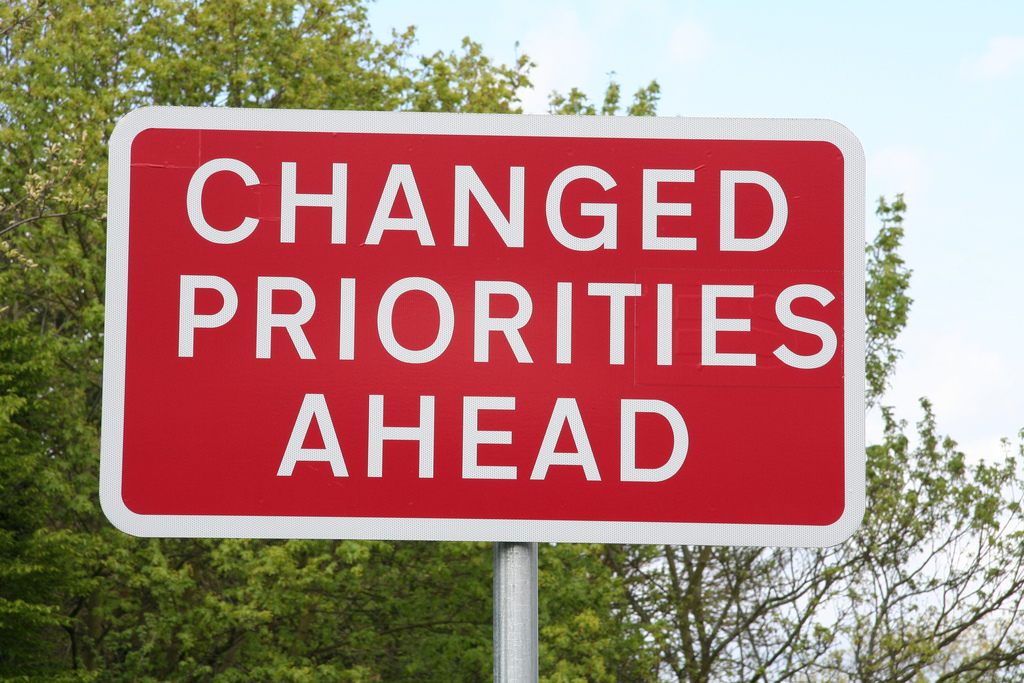
Many culture change projects are met with general enthusiasm at the conceptual level, but fall short during their implementation. In this Mini-workshop, participants will reflect on their own role as change agents and use Bolman and Deal’s Four-Frame Model to assess and describe different types of barriers to culture change initiatives (structural, human resources, political, and symbolic). We will then use the model to identify where community managers might exert leverage – and what specific actions could help to overcome the identified barriers.
On 21 January, 2021, the CSCCE Data Science Special Interest Group (SIG) convened a panel on data sharing and harmonization. The goal of the meeting was to highlight common challenges for community managers of data-centric communities, as well as discuss solutions and best practices to make it easier for community members to share and reuse data. In this blog post, watch the three short presentations from the panelists, and catch up on some of the key points raised.
On 23 November 2020, the CSCCE Data Science Special Interest Group (SIG) convened a meeting to discuss how to normalize talking about data. Julie Lowndes of Openscapes introduced the topic, providing an overview that is captured in full in the video archive below.
We’re delighted to announce that CSCCE has received a $125k grant from the Alfred P. Sloan Foundation to continue our work supporting the transition to online collaboration that’s been accelerated due to the global pandemic.
In this post, we outline what we plan to deliver thanks to this grant – and we indicate the emerging opportunities to participate or collaborate with CSCCE that will result.
Supporting a rapid shift in norms
The ongoing global COVID-19 pandemic has forced a sudden transition to online meetings and online work spaces for which many scientific organizations and communities were painfully under-prepared. Although discussions were underway in many organizations to improve access to conferences and events by offering virtual options, few had begun to implement them at scale. As a result, many organizations are now frantically trying to adapt, while lacking the in-house expertise, access to reliable information, and peer support necessary for staff to succeed.
Our October community call focused on the role of community in instigating culture change in scholarly communications. We heard from three members of our community of practice, each with a unique perspective and community to manage.
And, we celebrated the first birthday of CSCCE’s community of practice! Exactly one year ago, on 21 October 2019, Lou invited the first members to join our Slack workspace. It’s been a productive and exciting year, if somewhat unpredictable, and if you’d like to review our first year “by the numbers,” check out the first in a series of birthday blog posts.
October’s community call will take place on Wednesday, 21 October at 6pm UTC (2pm US Eastern Time) and will focus on the importance of convening and connecting different community stakeholders to bring about culture change in the ways we do and share science. We’ll hear from three community managers working in the field of scholarly communications, each with unique stories to share.
It’s also our community of practice’s first birthday, and we’re celebrating by giving away stickers to members of our community of practice. Let us know if you’d like some (info@www.cscce.org), and we’ll get them in the mail to you.
Join CSCCE at the 2019 FORCE11 Scholarly Communication Institute (FSCI) FSCI is a week-long course in scholarly communication for anyone who works in the world of science and scholarship. Classroom … Continue reading “Join CSCCE at FSCI 2019!”
Join CSCCE at the 2019 FORCE11 Scholarly Communication Institute (FSCI)
FSCI is a week-long course in scholarly communication for anyone who works in the world of science and scholarship. Classroom courses, group activities, and hands-on training provide attendees with “a friendly, community-based way of learning about and keeping up to date on the latest trends, technologies, and opportunities that are transforming the way science and scholarship is done.”
We’re continuing to share reflections from our 2017 Community Engagement Fellows on the blog. In today’s post, Melanie Binder shares some strategies for building internal staff relationships. You can catch up on all posts by the Fellowshere.
One of the challenges that many organizations face is how to get your internal staff (colleagues) and external staff (board members, etc.) to be supportive of your projects and goals. And when your new projects are ground-breaking and innovative within your industry, it can be quite a struggle to get all parties to share your vision. While we at the American Society of Plant Biologists have made great strides to address this issue over the past few years, it continues to be one of our biggest challenges.
How do you build strong staff relationships? Image Credit: https://www.flickr.com/photos/15132846@N00/8197868606/
This week saw the return of the 2017 class of AAAS Community Engagement Fellows to DC for their mid-year meeting. Following their week-long training in the fundamentals of community management back in January the Fellows have been working to support collaborations at their home institutions. Meet the Fellows and find out what they are each working on here.
The #CEFP2017 mid-year meeting had the theme of “change” – and we explored this from various angles including individual perspectives on implementing what’s been learned so far, organizational change, and what it means to create a “learning organization”. We also worked together on our community playbooks as tools to help us communicate the methods behind community management to our colleagues.
This website uses cookies to improve your experience. We'll assume you're ok with this, but you can opt-out if you wish. Cookie settingsACCEPT
Privacy & Cookies Policy
Privacy Overview
This website uses cookies to improve your experience while you navigate through the website. Out of these cookies, the cookies that are categorized as necessary are stored on your browser as they are essential for the working of basic functionalities of the website. We also use third-party cookies that help us analyze and understand how you use this website. These cookies will be stored in your browser only with your consent. You also have the option to opt-out of these cookies. But opting out of some of these cookies may have an effect on your browsing experience.
Necessary cookies are absolutely essential for the website to function properly. This category only includes cookies that ensures basic functionalities and security features of the website. These cookies do not store any personal information.
Any cookies that may not be particularly necessary for the website to function and is used specifically to collect user personal data via analytics, ads, other embedded contents are termed as non-necessary cookies. It is mandatory to procure user consent prior to running these cookies on your website.